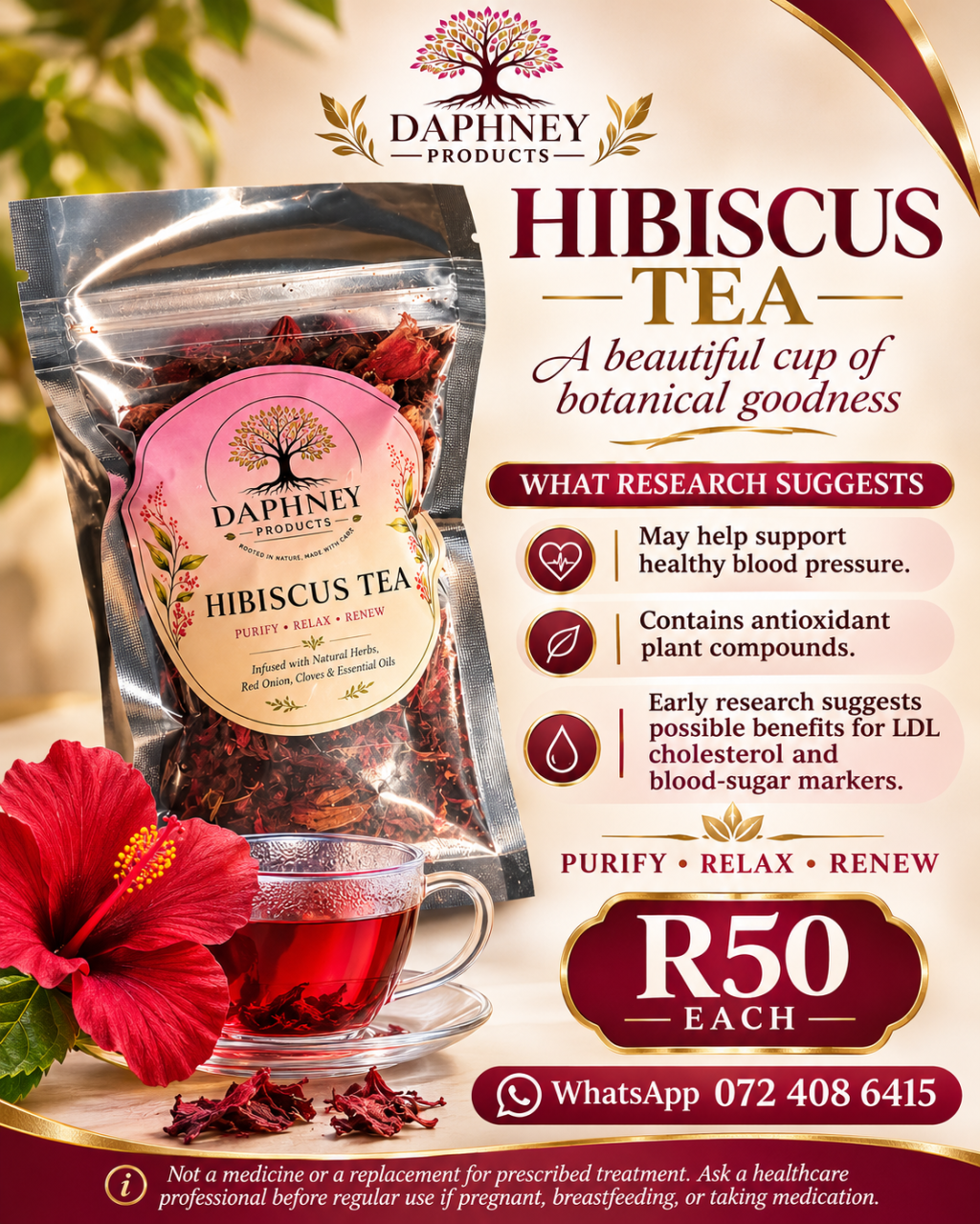
There is something beautiful about a cup of tea made from a flower. Hibiscus tea, known for its deep ruby-red colour and pleasantly tart taste, is more than a comforting drink. It is also being studied for the natural plant compounds it contains and the ways it may support aspects of our wellbeing.
What makes hibiscus tea interesting?
Hibiscus (Hibiscus sabdariffa) contains naturally occurring plant compounds, including anthocyanins and other polyphenols. These compounds contribute to the flower’s rich red colour and have antioxidant activity. Antioxidants help protect cells from oxidative stress, although drinking hibiscus tea should not be presented as a cure or a guaranteed way to prevent disease.
What might it do for our health?
- Blood pressure support: This is one of the better-studied potential benefits. Reviews of human trials suggest hibiscus may help modestly lower blood pressure in some adults. For example, someone who has been told their blood pressure is slightly elevated might ask their healthcare professional whether hibiscus tea can form part of an overall heart-healthy lifestyle.
- Antioxidant plant compounds: Hibiscus provides polyphenols and anthocyanins. Enjoying it as part of a varied diet adds another source of plant compounds — alongside colourful fruits and vegetables.
- Cholesterol and blood-sugar markers: Some research has reported possible improvements in LDL (“bad”) cholesterol and fasting blood glucose. Findings are not yet consistent, so hibiscus tea should not be relied on to manage cholesterol or diabetes.
- A thoughtful alternative to sugary drinks: If you enjoy it without lots of added sugar, hibiscus tea can be a flavourful way to add variety to your everyday drinks and support hydration.
Small examples of everyday enjoyment
You might enjoy a warm cup while winding down in the evening, or prepare it ahead of time and serve it chilled on a warm afternoon. You could pair your cup with a balanced meal rich in vegetables, fruit, whole grains and other nourishing foods. The value is in the overall pattern of care — not in expecting one tea to do all the work.
A gentle but important health note
Hibiscus may lower blood pressure, so people taking blood-pressure medicine should speak with a healthcare professional before using it regularly. If you take medicine for diabetes or any other ongoing condition, check for possible interactions with your clinician or pharmacist. If you are pregnant or breastfeeding, seek professional advice before using hibiscus products. Do not stop or replace prescribed treatment with tea.
Introducing Daphney Products Hibiscus Tea
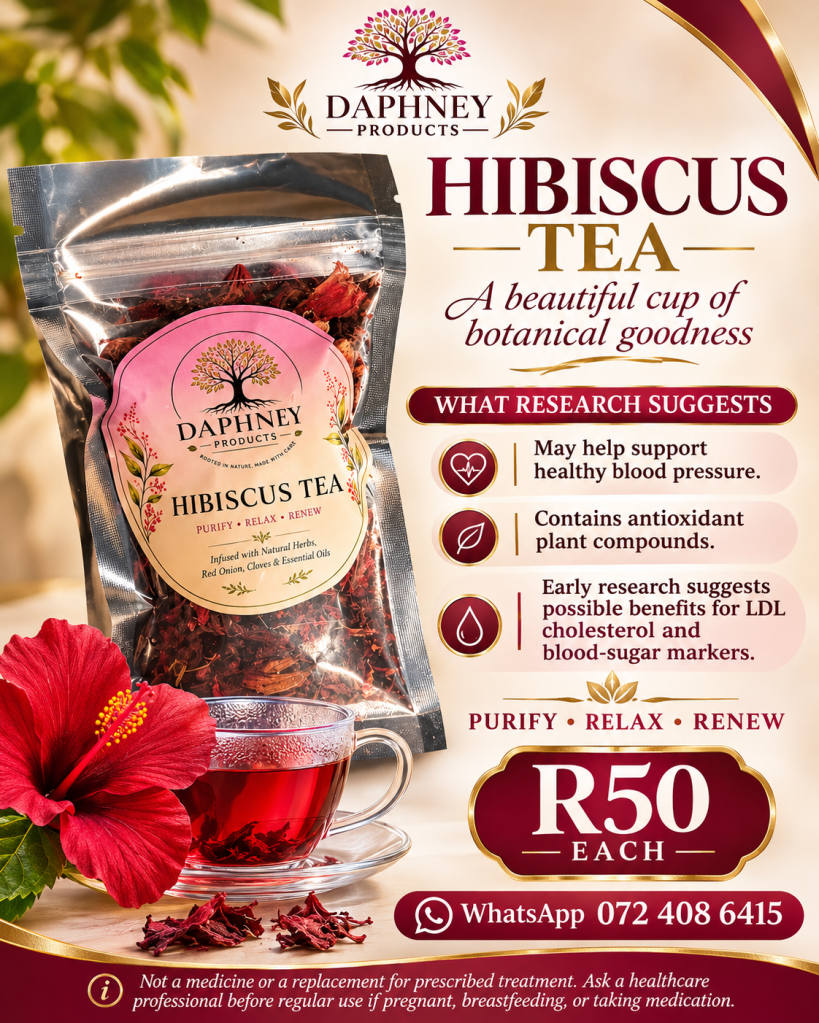
At Daphney Products, we celebrate the goodness and beauty found in nature. Our Hibiscus Tea is offered at R50 each. For orders and enquiries, WhatsApp 072 408 6415.
Purify • Relax • Renew
A final thought: Nature gives us beautiful ingredients to enjoy, and knowledge helps us use them wisely. Let every cup be a moment of care — alongside balanced food choices, movement, rest and appropriate healthcare.
Evidence note: Human research reviews have found a possible blood-pressure benefit, while evidence for cholesterol and blood-glucose effects remains mixed and further research is needed. This article is for general information and is not medical advice.


Leave a Reply